There are various governmental and non-governmental institutions and actors that have influenced policy related to youth suicide. Actors can be governmental such as “the administration, civil servants, and Congress” and non-governmental such as “interest groups, academics, media, and public opinion” (Kingdon, 2011, p. 21). Youth suicide is a problem that can be addressed by statutory and regulatory mechanisms on many different levels. Although there have been significant strides taken in the last century towards suicide prevention there are still many gaps and problems. As a future Nurse Practitioner, it will be important for me to understand the current laws related to mental health so I know what can be done in the future.
The United States started the first suicide prevention center in 1958 funded by the U.S. Public Health Service (U.S. Department of Health and Human Services (HHS) Office of the Surgeon General and National Action Alliance for Suicide Prevention, 2012). Then, the National Institute of Mental Health (NIMH) created a task force in Arizona to determine priorities and actions for suicide prevention in the US and the findings were reported in 1973 (U.S. Department of Health and Human Services Office of the Surgeon General and National Action Alliance for Suicide Prevention, 2012). After the Centers for Disease Control and Prevention (CDC) found that youth suicide was increasing, HHS created a new Task Force on Youth Suicide in 1989 (U.S. Department of Health and Human Services Office of the Surgeon General and National Action Alliance for Suicide Prevention, 2012). Also on the federal level, the Garrett Lee Smith Memorial Act (GLSMA) created a federal grant program for youth suicide prevention that provides funding to colleges and universities for prevention efforts (U.S. Department of Health and Human Services Office of the Surgeon General and National Action Alliance for Suicide Prevention, 2012). Although there is a National Suicide Prevention Lifeline (1-800-273-8255) that provides 24/7 support from crisis centers across the US, there has recently been a proposal to change the phone number to 988, a shorter number that would be easier to remember in a crisis (Federal Communications Commission, 2019).
In my previous blogs, I wrote about some of the specific changes happening in Arizona. The Mitch Warnock Act requiring school employees to get suicide prevention training who work with children from grades 6-12 will begin in the 2020-2021 school year (Office of the Governor, Doug Ducey, 2019). This statute set forth by the Governor requires regulations from school boards in order to be successful. Additionally, the Arizona Health Care Cost Containment System (AHCCCS) and the Arizona Suicide Prevention Coalition have annual state plans that provide recommendations, objectives, and strategies for suicide prevention in Arizona (Arizona Coalition for Suicide Prevention and AHCCCS, 2019). Youth suicide prevention is a huge issue right now and has been receiving more and more media attention due to the recent frightening statistics. There have been numerous bills related to suicide and mental health that have been introduced to the Arizona State Legislature this year.
On February 3rd, I participated in the American Foundation for Suicide Prevention Day at the Capitol in Arizona. I was able to sit down with a few legislators and fellow advocates to talk about a few new bills, including Jake’s Law. I had the privilege of speaking with Senator Rick Gray about Jake’s Law (SB1523) and the problem of youth suicide. Senator Gray spoke about the importance of community and connections between one another for mental health. He commended a young student for being brave and sharing their story in the meeting. He also talked about the importance of youth being open and transparent about how they are feeling with their peers which can give other peers hope. When we spoke to him about teens and mental health, he recommended that we also speak with school boards to address specific issues in school because they set district wide policies. It was great to be able to sit down with a lawmaker and hear his thoughts on mental health. Legislators are so busy during this time of year and it was great to see how open they were to hearing what we had to say and providing recommendations.
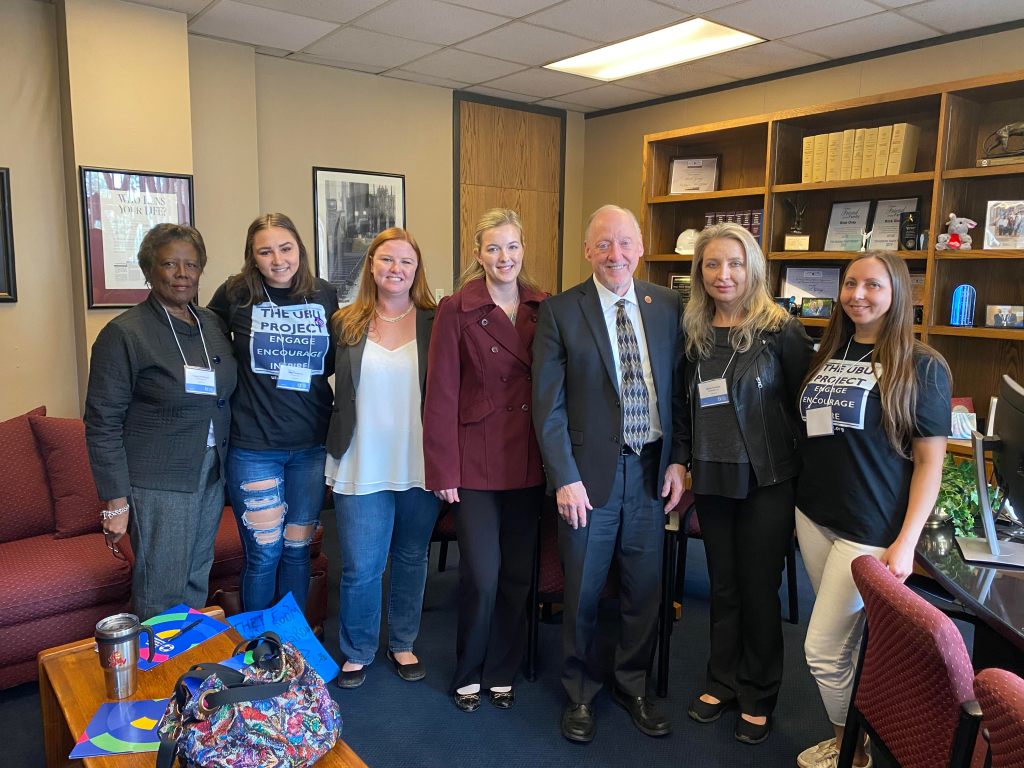
I also had the privilege of meeting and speaking with Ben and Denise Denslow, the parents of Jacob Edward Machovsky, who passed away in 2016. Ben and Denise lost their son to suicide and this moved them to working with Senator Brophy McGee and Representative Weninger to create and introduce Jake’s Law. They don’t want any other families to go through what they did, so they are hoping to pass Jake’s Law and get increased mental health services to Arizonans. Ben spoke to me about his experience creating the bills and navigating the political arena. It was amazing to meet them and hear their story.

References
Arizona Coalition for Suicide Prevention and Arizona Health Care Cost Containment System. (2019). An end to suicide in Arizona 2019 state plan. Retrieved from https://tst.azahcccs.gov/AHCCCS/Downloads/2019StatePlantoEndSuicide.pdf
Federal Communications Commission. (2019). FCC proposes 988 for suicide prevention and mental health hotline. Retrieved from https://www.fcc.gov/document/fcc-proposes-988-suicide-prevention-mental-health-hotline
Kingdon, J. W. (2011). Agendas, alternatives, and public policies (2nd ed.). Boston, MA: Longman.
Office of the Governor, Doug Ducey. (2019, May 8). Governor Ducey signs bill combating teen suicide [Press release]. Retrieved from https://azgovernor.gov/governor/news/2019/05/governer-ducey-signs-bill-combating-teen-suicide
U.S. Department of Health and Human Services (HHS) Office of the Surgeon General and National Action Alliance for Suicide Prevention. 2012 National Strategy for Suicide Prevention: Goals and Objectives for Action. Washington, DC: HHS, September 2012. Retrieved from https://www.ncbi.nlm.nih.gov/books/NBK109918/
 Child and Adolescent Suicide in Arizona
Thanks for your blog, which talks about the very important mental health issue of the rising rate of suicide among teens. Suicide is preventable in teens by making educators, health professionals, and parents working in partnership to identify the early warning signs of suicide in teens. I hope and wish for the successful enactment of Jake’s law that will increase access to mental health services for Arizonians that will allow patients struggling with mental health illness to get appropriate and required care.
LikeLike
The blog post for this week was sincerely enjoyable to read more about the different historical perspectives and contemporary roles of institutions in youth suicide prevention efforts in Arizona. The comprehensive review of the current attempt behind the Jake’s Law (SB 1523 and HB 2764) legislation pieces was extraordinarily compelling and inspires hope that we might be making substantial improvements toward advancing better harm reduction approaches to suicide prevention. Although, you present a clear argument for the influence that many governmental and non-governmental institutions and actors have on youth suicide prevention measures and community-based responses. Is there ever any concern or sense of pause created for you that connecting policy to a multiplicity of institutions might inhibit the efficacy of crisis response? For example, it can sometimes be challenging to determine the reach and effectiveness of a specific policymaking process because rather than leveraging institutional power to scale ideas and solutions, instead, efforts become mired within the various layers of bureaucracy or lack appropriate stakeholder-level support (Longest, 2010). Institutions can serve as an unintended constraint function on policymaking, and governmental forms and procedural requirements may make some outcomes unlikely (Kingdon, 2003). Thus, maybe multi-faceted and multiple-layered policy structures, even if well-intentioned, become positive outcome obstructionists.
References:
Kingdon, J. W. (2003). Agendas, alternatives, and public policies. New York: Addison-Wesley Educational Publishers Inc./Longman.
Longest, B. B. (2010). Health policymaking in the United States. Chicago, IL & Arlington, VA: Health Administration Press & Association of University Programs in Health Administration.
LikeLike
Mykaila,
Recently I attended the Arizona Rural and Public Health policy forum and learned a lot about those who are at risk of suicide. There are several groups who are more likely to commit suicide than average, including the impoverished, veterans, elderly, and even nurses! However, when a person ends their life before it even really begins, there is nothing more tragic. I liked reading about how a student went to the capitol to share their story. Even though there were institutions aimed at preventing suicide when I was growing up, I still don’t feel like it was “normal” to share these types of feelings, especially as a boy or young man. I believe we need much more of these types of stories in order to educate society and to let others know that it is ok to express these types of feelings.
Evan Eisenberg, BSN, RN, ASU DNP Student
References
Levy, B. S., & Sidel, V. W. (2013). Social injustice and public health (2nd ed.). New York, NY:
Oxford University Press.
LikeLike